
Dr. Wendy Bedale and Dr. Andrew Milkowski discuss the scientific mechanisms behind processed meats and health.
Three of our AMSA experienced academic professionals will guide you through the journey to tenure.
During this webinar Candice Belandres led a discussion on inviting and maintaining student engagement within the virtual learning environment. She also identified obstacles, opportunities for interaction, and tools for the instructor.
Demystifying the publishing process – how to work with your journal to publish and promote your work
Are you passionate about preserving the future of livestock production through responsible and sustainable antibiotic use?
This presentation focused primarily on the efficacy of antimicrobial interventions at reducing Salmonella and Shiga toxin-producing Escherichia coli on the market hog carcass surface, as well as Salmonella on pork subprimals and trim.
In this webinar Dr. Phil Bass and Dr. Brad Kim presented over commercial dry-aging practices and their values along with elaborating scientific literature, recent updates, and research gaps/opportunities.
In this webinar Dr. Holman covered some of the basic aspects of microbiome research and how it may be used to enhance health and production in livestock.
This webinar provided a brief overview of National Institute of Food and Agriculture grant opportunities in the area of Animal Health and Production and Animal Products, followed by a discussion of grantsmanship.
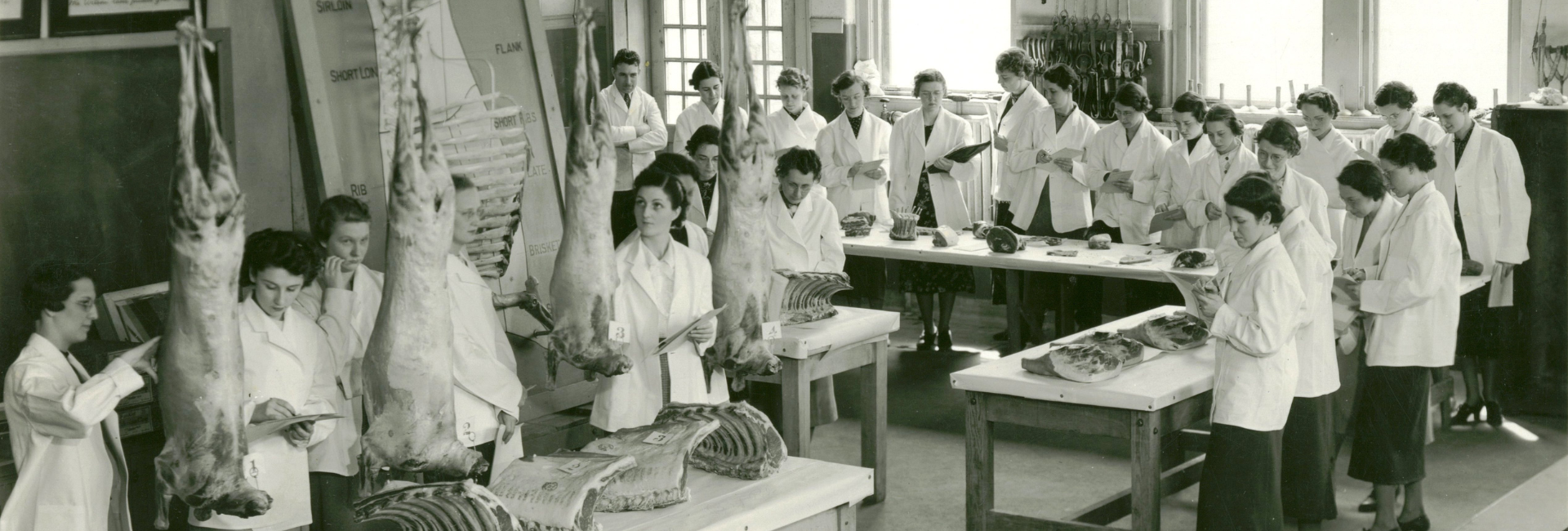
During this webinar Dr. Morgan highlighted photographs of Chicago’s Packingtown from the turn of the twentieth century.
This webinar covered the latest factors related to buying behaviors, sales trends, and protein perceptions.
On September 1,2020 the National Pork Board launched Real Pork to celebrate pork and the producers who bring it to consumers’ tables.
Dr. Wendy Bedale and Dr. Andrew Milkowski discuss the scientific mechanisms behind processed meats and health.
Listen to Drs. Frédéric Leroy and Alice Stanton discuss meat consumption and the complexity of too much and dangers of too little consumption, a featured article in the April 2023 Animal Frontiers Journal!
Good food” is a slippery concept. It comes with obvious moral and ideological overtones, serves different and often antagonistic agendas, and is strikingly difficult to define, as its meaning varies greatly depending on the narrator.
The task is simple…we must feed approximately 10 billion people on this planet by the year 2050, and do so with the same basic level of natural resources that available today.
Gene editing in agriculture has tremendous potential to benefit society and food production.
Dr. Frédéric Leroy, Professor at Vrije Universiteit Brussel, Belgium addressed the consumer and the scientific community sharing insight into behavior toward meat in the diet to help attendees better understand.
Dr. Cody Gifford provides an overview on the use of Rapid Evaporative Ionization Mass Spectrometry (REIMS) as an instrument to characterize flavor profiles in sheep meat.
In this webinar Andrew Stout and Natalie Rubio discussed how invertebrate and mammalian cells can be used to improve the value proposition of cultured meat and help bring cultured meat products to market.
Nutritional contributions of pork in the diet and the research being conducted to continually evaluate and improve pork value and quality.
Factors influencing the quality of fresh and processed pork were discussed with areas for needed future research highlighted.
In this webinar Dr. Ranjith Ramanathan covered an overview of different omics and discussed some of the terminologies used in omics approach. In addition, the webinar discussed examples of how omics can be used to understand complex meat quality traits.
In this webinar Dr. Phil Bass and Dr. Brad Kim presented over commercial dry-aging practices and their values along with elaborating scientific literature, recent updates, and research gaps/opportunities.
Dr. Cody Gifford provides an overview on the use of Rapid Evaporative Ionization Mass Spectrometry (REIMS) as an instrument to characterize flavor profiles in sheep meat.
Innovative tools to predict consumer perceptions and emotions have been used to understand consumer reactions to meat color and marbling. Initial results will be presented during this webinar, and the technology will be demonstrated.
Dr. Sara Crawford joined the AMSA student webinar on November 2nd to speak about Demystifying Sustainability in Agriculture.